
Time and Tide
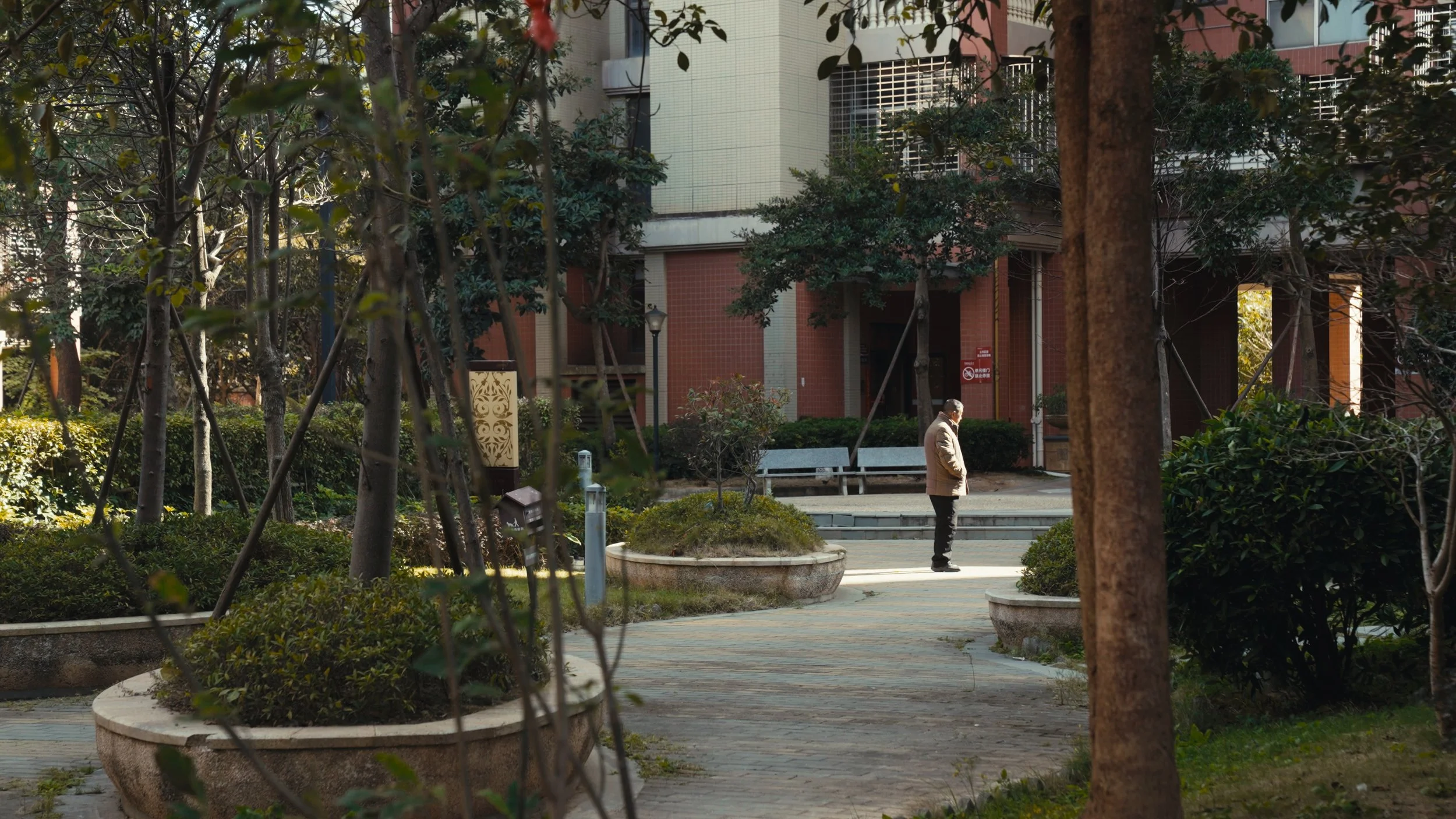
Set in a remote town in China, when a once-proud and stubborn patriarch suffers a stroke, the burden of his care falls on his estranged wife, who has long wanted to leave their unhappy marriage, and his second daughter, a single mother struggling to make ends meet.
Time and Tide is a hybrid nonfiction film, a vérité-style account of contemporary China seen through the eyes of a multigenerational family navigating ageing, hurt, and the weight of family responsibility.
A New Idea - September 2023
Fresh off the success of our last short film Jia, we wanted to go bigger and bolder for our next project together and use the momentum to do something different. Instead of filming here in Australia, we decided to film in China - to tell stories we wouldn’t be able to back here. Vee had always wanted to film back in his home town of Fujian and he began making plans on how to accomodate that. Looking back on recent family events, he also felt that there was an opportunity to reflect on the past and his fortunes of having a life overseas.
The idea began in September 2023 on a cold night along a beach in Busselton. We were at CinefestOZ film festival promoting Jia and were contemplating what we would do next. Naturally we reminisced about how we got to where we were and Vee began describing his relationship with his parents. This formed the base of the premise.
Preparations - September 2023 to December 2023
As soon as we arrived back in Melbourne, I jumped straight into shooting a VCA Masters short film. On this shoot, I met Yilin Xie (Lin) who was my camera assistant. She was a Documentary student at VCA and upon learning that she was from Guangzhou, China I floated the idea to Vee that she could join us in China. We originally toyed with the idea of just the two of us (Vee and myself) shooting but when we realised the scope of what we planned to do, we knew that we had to bring a third person on board. Being a documentary student and a Guangzhou native; one of the cities we were going to shoot in, she was the perfect person to join us to which Vee agreed. We had our first production meeting together on December 3rd 2023. By 18th December we were on a flight back to China ready to shoot.
Writer / Director/ Producer/ Editor - Vee Shi
Producer/ Cinematographer - Nicholson Ren
Sound Recordist - Yilin Xie
Within 2 weeks of coming back to Melbourne, Vee had asked his Mum to send videos of their apartment and a few pictures of his extended family. After seeing the pictures and hearing abit more about his family history, the idea became more real and we started to seriously plan to go over.
Visa Application - October 2023
Applying for a China Visa meant booking flights and preparing to live in China before being allowed to. We had to provide documents with proof of accomodation, return plane tickets and an invitation letter from Vee’s parents to stay with them. We also provided an itinerary of potential places we could visit. Within 2 weeks of applying, we were approved for a tourist visa to visit.


Visual References and Style
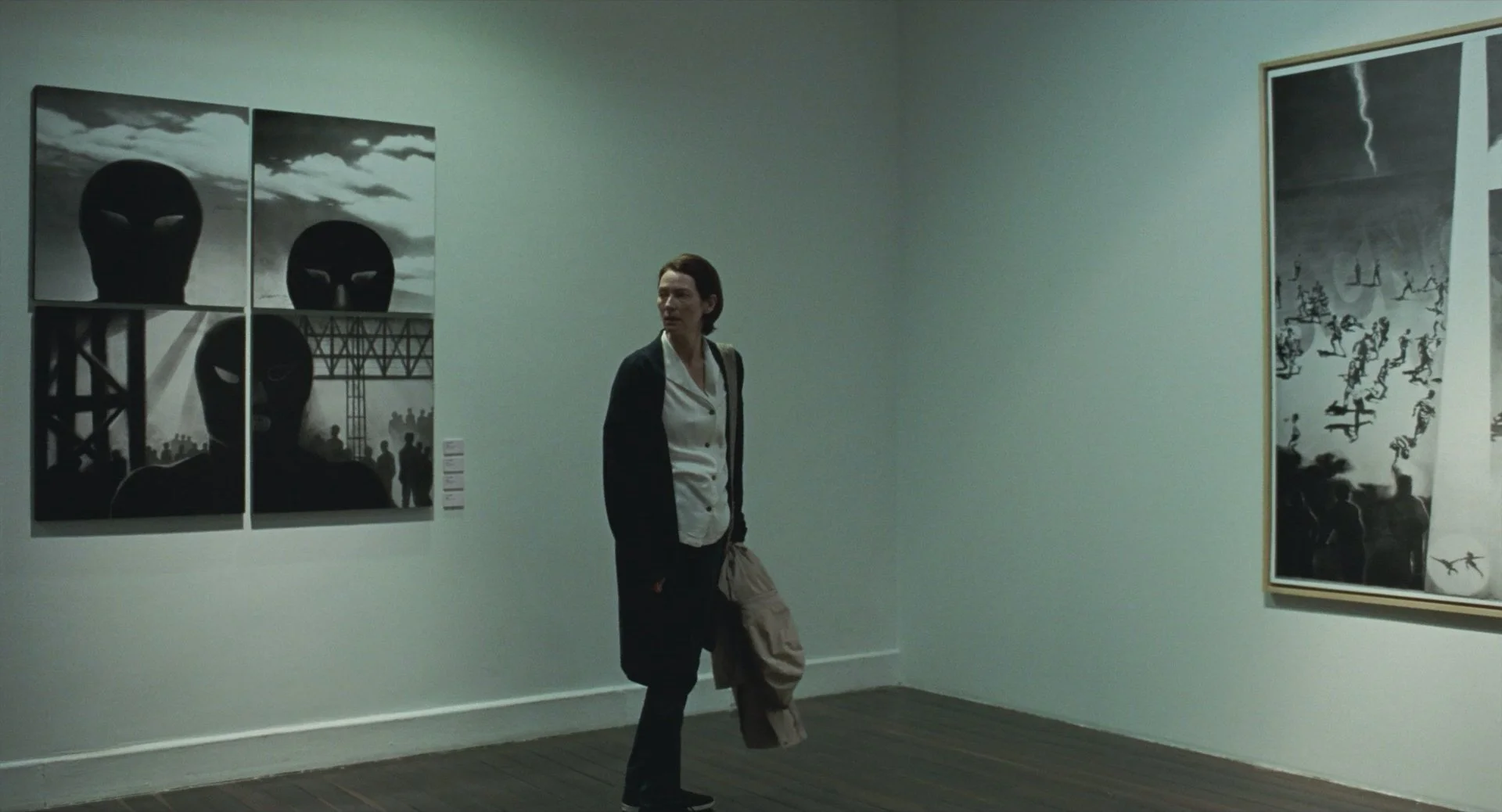
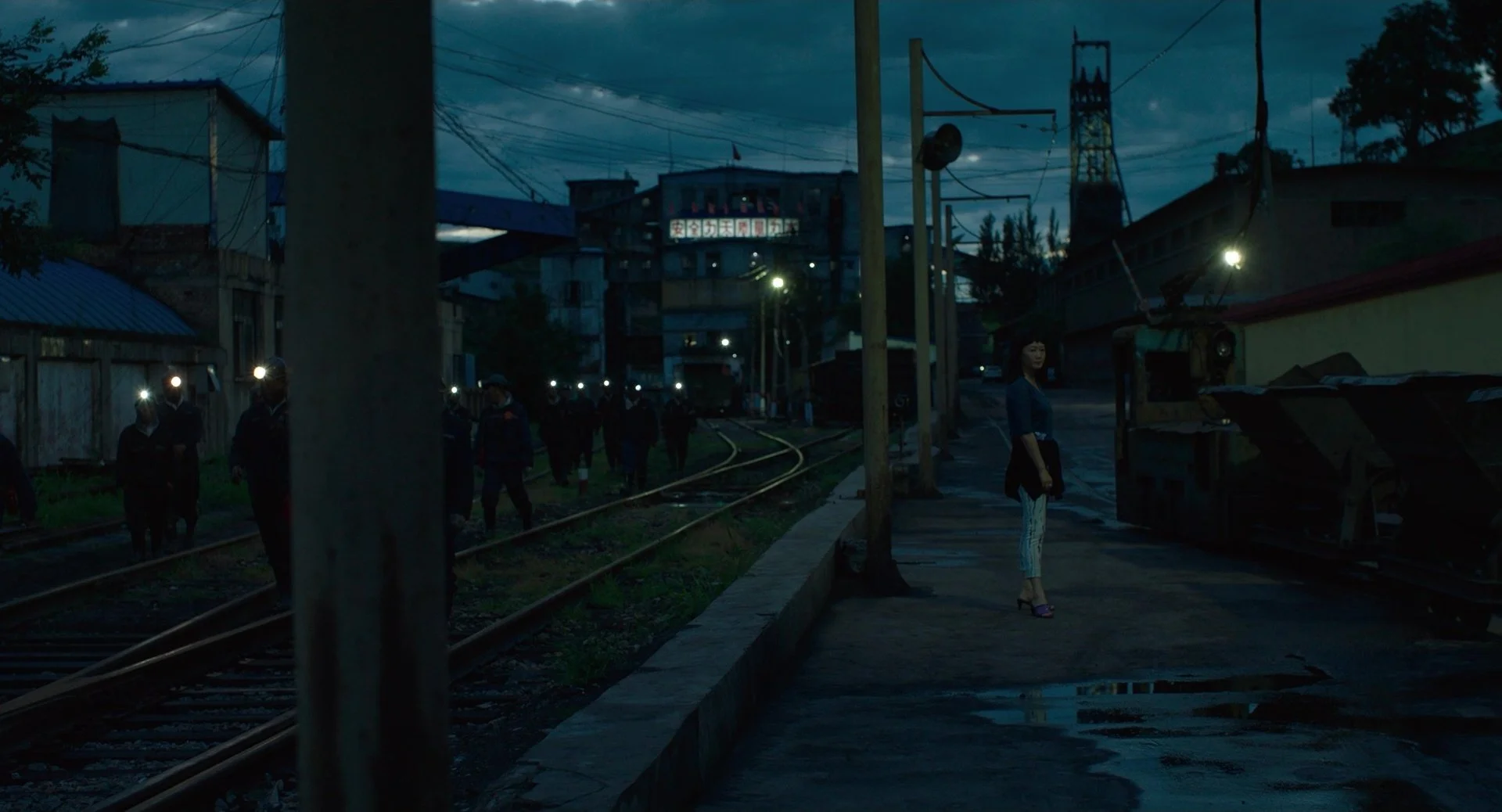
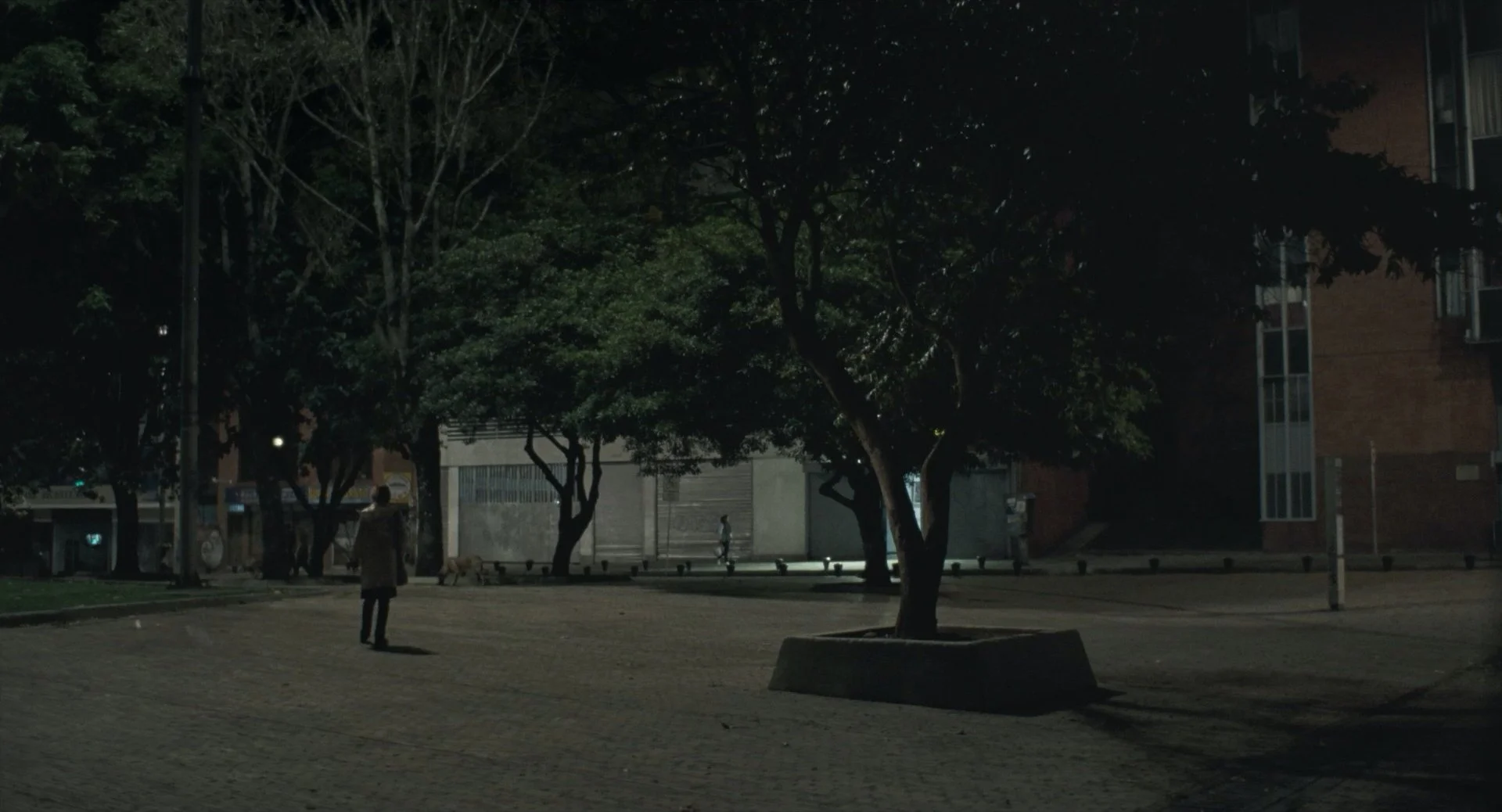
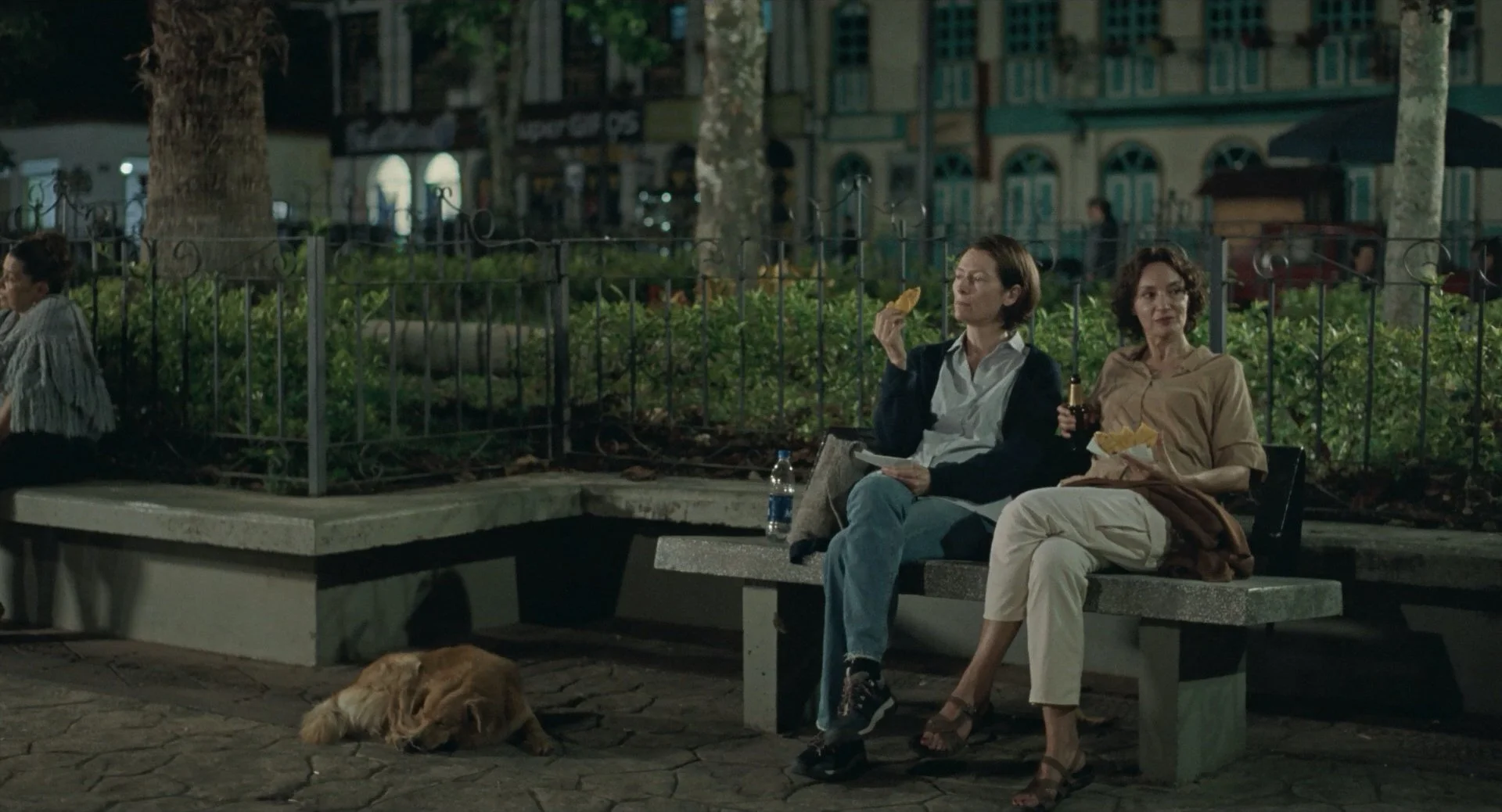
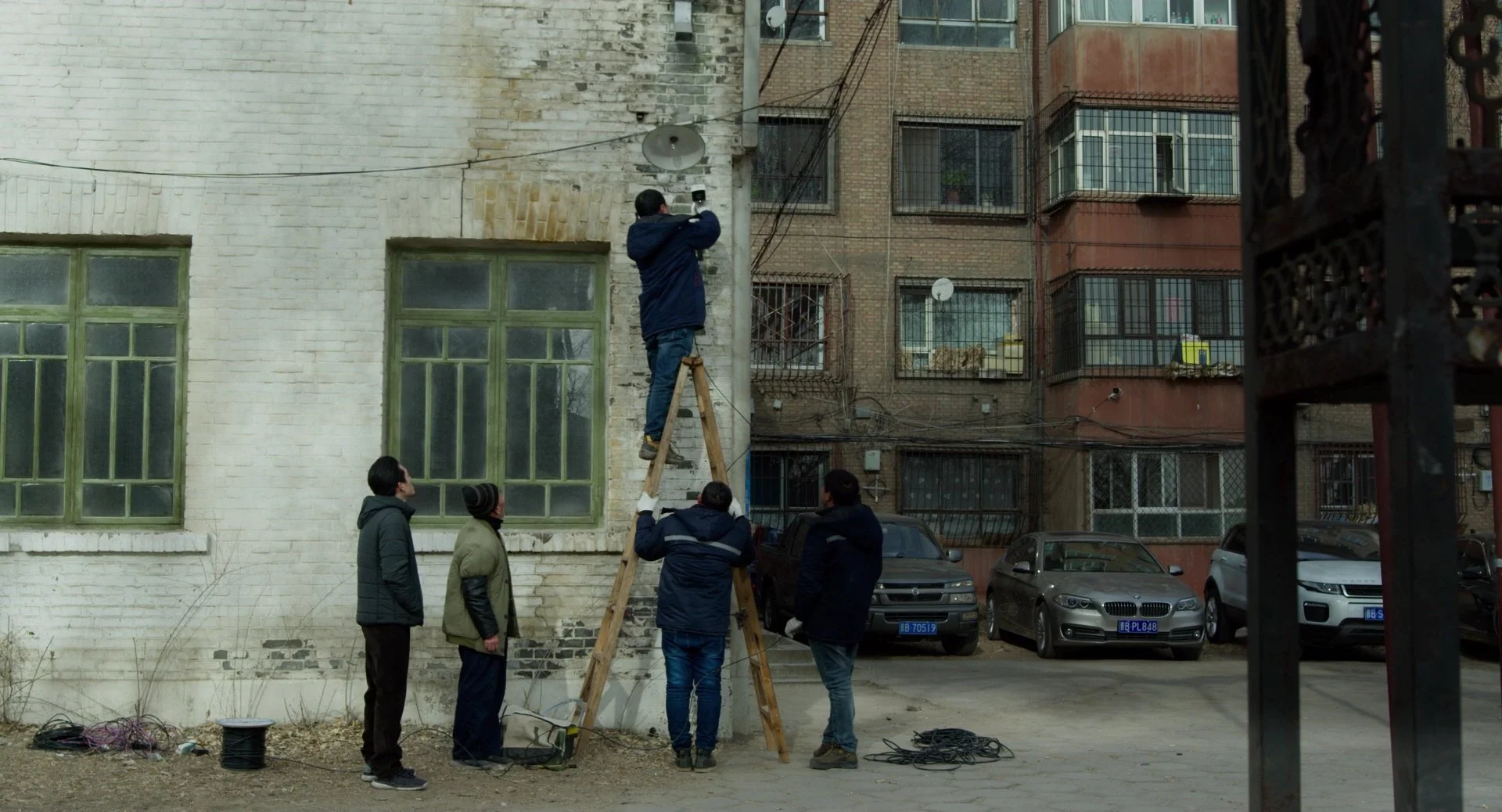
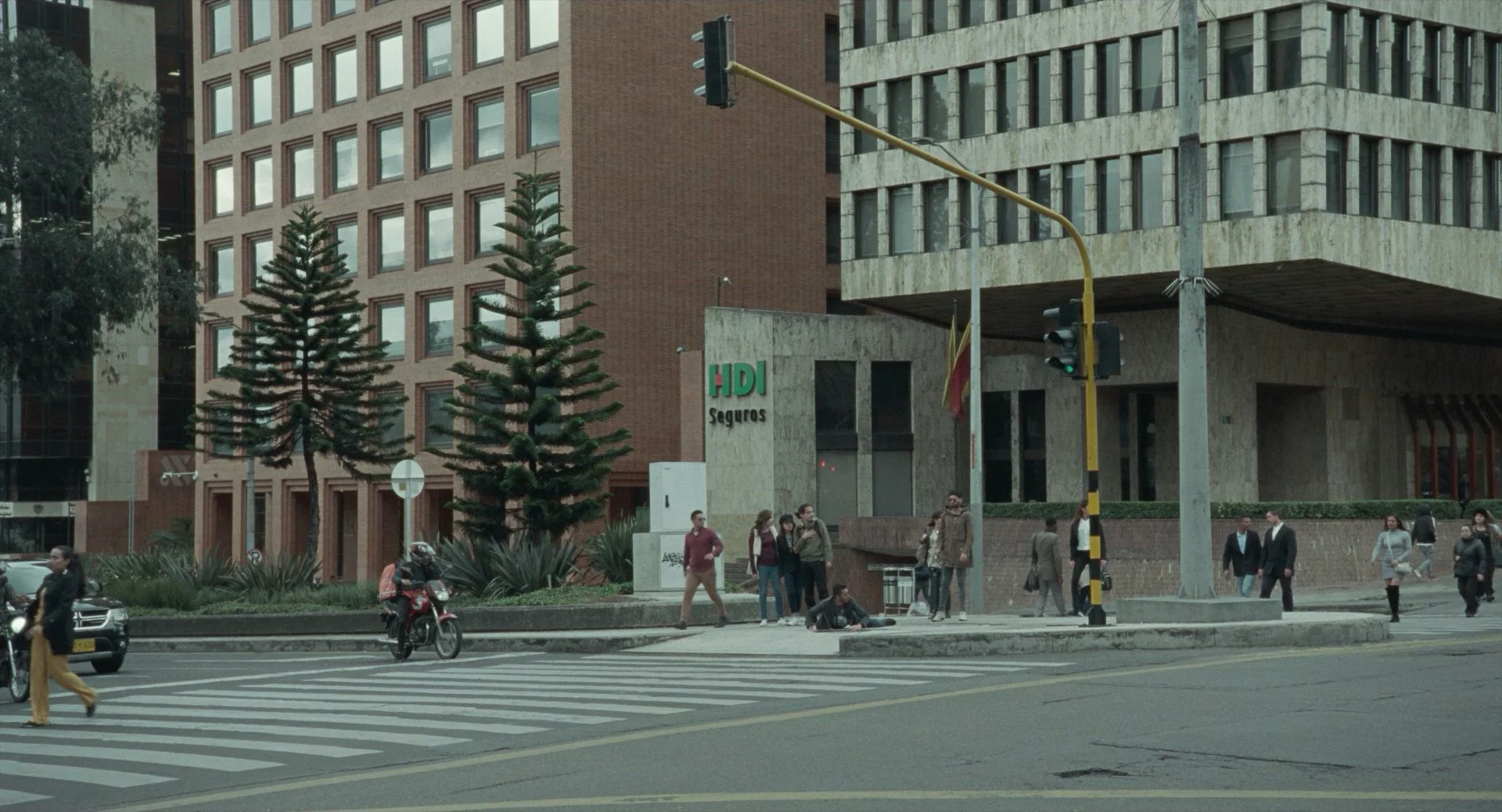
In order to begin discussing what equipment we needed to bring we had to talk about the style. Being a small crew, we were very limited in what type of shots we could do. Memoria (2021) was the greatest influence over the style of what we knew we could achieve - wide unmoving shots with character influenced action happening within the frame. We knew we wouldn’t be using handheld, dollies or sliders so our focus was building a kit that could be portable, lightweight and quick to set up.
Logistics

When choosing the gear for this project we had to consider things that we normally didn’t need to:
1. Renting locally or bringing gear over
Renting equipment in China was roughly 50% cheaper but we didn’t have the luxury of testing and preparing the equipment beforehand. The rental houses we found were also in other provinces, which meant more time travelling to collect and drop off while also having a time restriction of when we had to return them. We also wouldn’t know if we had everything prepared until we got there. In the end, we decided to rent from Melbourne (Lenshire - www.lenshire.biz) and bring it over with us so we were confident we had everything we needed with us. A few other items like the tripod, additional AA batteries and V-lock batteries were purchased on Taobao and sent to the accommodation. Taking out semi-professional equipment through customs and past the Chinese border was our next concern. Our full equipment list is further down below.
2. Border control - Batteries and Carnets
When researching about bringing camera equipment across borders the first thing most people will read about are Carnets. For more expensive equipment valued above $10 000 I would suggest seriously looking into this but for me I thought an FX3 with a couple consumer stills lenses could pass as a hobbyist tourist rather than a professional kit. Applying for a carnet would have meant paying a deposit and categorizing all the equipment we’re bringing out with serial numbers more than a month before leaving, but we didn’t even have everything confirmed before then. Leaving Australia wasn’t our concern, it was bringing it back in that was. We had fears that the Chinese immigration would want to look at what was on our hard-drives as we had multiple 10TB drives with us with professional recording equipment and to potentially confiscate it. But we passed through without an issue. To minimize concerns that we were bringing goods purchased overseas into Australia without paying tax, we brought along folders with our equipment rental agreements and receipts of proof of purchase within Australia. Thankfully these were not needed.
If it wasn’t the multiple lenses and on-board monitor that raised alarms it could have been the 5 multiple audio packs and a Zoom F8 that we had along with the amount of batteries we brought onto the plane. We chose 5 audio units for the event that we had to mic up every single one of Vee’s family members at the same time. This happened a few times but we were lucky to have had enough. To decrease scrutiny, we opted to purchase v-lock batteries in China that powered our Zoom F8 unit while separating the kit as much as we could between the 3 of us. But in our haste to separate audio units from our camera kit we left batteries inside our audio units which caused Chinese officials to search our luggage upon arrival. Leaving the country, they scrutinized every single battery we had as well.
3. Legal Audio Frequency Ranges
The Sennheiser EW100 units we brought along had to be within the legal frequency range in China. For us that meant renting Band B (626-668Mhz) units that were within the legal limit. A simple check on the Sennheiser International Frequency Advisor page would let you know which frequency is legal to use in your country and then pairing the right unit Band to that.
4. Data management
The table below shows the calculations I did to estimate how many and what hard-drives I needed to get for the production. As we didn’t know how much we were going to shoot there were a few assumptions I had to make. Of our 29 days in China, 3 were travelling days where we probably weren’t going to shoot as much and we would also have a couple of days off without filming to rest. This left us with 24 shoot days and within those shoot days I estimated shooting a total of 4 hours run time. On previous narrative short films we shot about 2 hours of footage a day, I doubled that as an estimate for our documentary style. Audio data was also estimated at the highest rate with maximum 4-channels recording every time even though I knew we would only have that set-up a handful of times.
From the calculations I knew we couldn’t shoot in 4K ProRes HQ; the typical codec of choice, as data storage (92TB) for 1 copy alone would be too high. Forgetting to convert mb/s to MBps originally tripped me up, we were estimating 8 times more data than we anticipated but after realising the error, I realised XAVC-I 4K 25p was well within reason. We settled on 12TB harddrives for the production and in reality we shot a total of 8.12TB. For 32TB of data we estimated spending $1350 on hard-drives alone.
As a precaution, we had also subscribed to Baidu cloud servers and uploaded our footage online every night. When we got our harddrives safely back home we deleted everything off the cloud.

Data Management Estimation Calculation
In order to film for a whole day without needing to offload, we brought 2 x 128GB SD cards and 2 x 80GB CFExpress A Cards. This gave us 3.7 hours of footage before needing to copy data and free up some space. Having more than an hour to record on 2 cards also meant that we could leave the camera rolling during unplanned sequences and let the scene gradually build. This became one of the key shooting styles during intimate moments such as mealtimes and family discussions.
Every night while uploading footage to the cloud, we would catalogue everything we shot in a logbook. Below shows a sample of our FX3 footage, Audio and iPhone spreadsheets. Lin and I would review all the footage and audio clips at night while Vee would review them in the morning. It was important that we did this as we went along because we could check the quality of what we were shooting and make adjustments along the way. An example of this was originally wanting to keep a low profile by using only lapel mics but after a week of hearing clothes scratches in our audio and muffled voices we purchased a shotgun mic and boom pole for the remainder of the shoot.
The final card count was 92 with 1670 clips. In total there was 72 hours of footage captured in 29 days. With a final runtime of 1.5 hours this gave us a shooting ratio of 48:1.

Camera Logbook

Audio Logbook

iPhone 15 Logbook
4. Shooting in public
In order to move fast and keep a low profile I aimed to have the bare minimum camera build. The camera rig was built to be the smallest size possible with only a 5” external monitor and a tentacle sync attachment. I would also occasionally remove the monitor if we wanted to appear smaller and less “professional”. In a backpack we brought along the lenses, memory cards and batteries. Vee always had his ipad connected using the Monitor & Control App so that he could distance himself from me and not draw more attention around the camera.
The biggest attention draw was the Boompole and windshield. People would notice us filming when we pointed the mic at people talking. In order to minimize this distraction, we relied heavily on lapels picking up voices and interactions with strangers that we couldn’t mic up. The shotgun mic on the boompole was treated as a backup.
We noticed that the general public would be curious of what we were filming but did not seem to care or to interfere infront of the camera. They were more interested in watching from behind the camera and to know where they could view the final video. Douyin (抖音)is a popular Chinese video-sharing platform similar to tik-tok that everyone expected us to be filming content for.

Lin with the sound recording setup and the camera build
Equipment List
Our camera kit consisted of the following:
1 x Lowepro Tactic 450 AW II Backpack
1 x FX3 + XLR Top handle
2 x Sony 80GB CFExpress A Cards
2 x 128GB V90 SD Cards
6 x Sony FZ100 Batteries
1 x Sennheiser MKE600 Shotgun Microphone
1 x Sony 24-70mm F2.8
1 x Sony 20mm F2.8
1 x Sony 24mm F2.8
1 x Nisi 82mm VND
1 x 72-82 Step up Ring
1 x Atomos Ninja V 5” Monitor + 480GB SSD
1 x Milliboo Tripod
1 x IPhone 15 Pro Max + Mini Camera Tripod
1 x NISI IP-A Filmmaker Kit ND Filter + 500GB SSD

Our full camera build on our “Hi-hat” with iPad remote monitoring
Sound Kit:
1 x Zoom F8
5 x Sennheiser EW100 G3 - Range B 626-668 MHz
1 x Rode NTG-4 Shotgun Mic
1 x Boompole
2 x 95Wh Vlock Batteries
1 x Tentacle Sync
40 x AA Rechargeable batteries

The Sound Kit at our maximum. 4 Channels with a transmitter feed to camera
Equipment Testing - 3 Dec 2023
With 2 weeks before our flight we had to test our workflow and make sure we had everything. Our main concern was having enough batteries to last a day and to also minimize the work we had to do in post. As we expected to shoot uncertainly we didn’t use a slate and relied heavily on timecode to sync our clips.
1. Camera Scratch Audio
We needed to make sure we could transmit audio from the Zoom F8 to the camera. This was important as we didn’t know what actions were happening and how many people we’d see on screen. We anticipated them moving in and out of frame or being too far away that we couldn’t rely on the boom or shotgun to capture audio. Our set-up was to run a line out into a G3 Transmitter and have a receiver on the FX3. This was the best set-up for any external filming we did. One of the thing we knew we couldn’t do was ADR so we had to make sure all audio capture was useable and easily synced with the visuals. We relied on the tentacle sync to reduce editing times. For all iphone footage however, we had to manually sync the audio and visuals.
2. The iPhone 15 as a B-Camera
We chose the iPhone 15 as a back-up camera just in-case we had problems with the FX3 or if we needed a 2nd angle. I shot some test footage before hand to see what kind of situations we could use it in and if we could match them in post. In brighter situations, the iPhone held up but it was noticeably noiser at night. We had to purchase a Variable ND specifically for the iphone and a small stand which we could use as a hi-hat for the FX3 as well. We filmed using the Blackmagic app which helped us adjust our phone settings to match the FX3. We filmed in Apple-log 4K ProRes HQ onto a 500GB Samsung T5 SSD.
3. Packing light
I wanted to make sure everything we needed for shooting could fit into 1 bag. We were not in controlled environments so I had to make sure we could move quickly and safely.
When travelling around, I opted to keep the set-up built to carry everywhere with a bag for just the lenses and other miscellaneous.

Testing the camera build

Audio test
iPhone - Blackmagic App
If we were to use the iPhone’s default camera app to shoot, we wouldn’t have finer controls such as false colour, focus assist or white balance settings to help us create the best image. Using the Blackmagic app, it gave us control to fine tune the iPhone images to help match our FX3.
Because it’s a phone, there are a few restrictions we had to consider. Firstly, I would stick to the fixed focal lengths that is given by default. Zooming in or out from these ranges instantly degrades the images. For the iPhone 15 this meant we were stuck with 13mm, 24mm or 77mm, all with fixed apertures of around F1.6-2.8. The default response in the blackmagic app is to adjust the ISO or shutter to compensate for exposure. But with a VND, I could lock all the settings and adjust exposure with the VND instead.
The purpose of having the iPhone 15 was to have a cheaper alternative than a 2nd FX3 that gave us the flexibility of cutting around longer scenes. It was very helpful in some moments but you can feel the limitations in certain situations such as in tight spaces without the ability to quickly adjust your settings.

iPhone - Apple-Log image

FX3 - Slog3 image

Apple-log Angle 1

Sony FX3 - Main Camera Angle

Apple-log Angle 2
December 18th 2023
We began our trip to Fuzhou and filming of Time and Tide began.
Locations
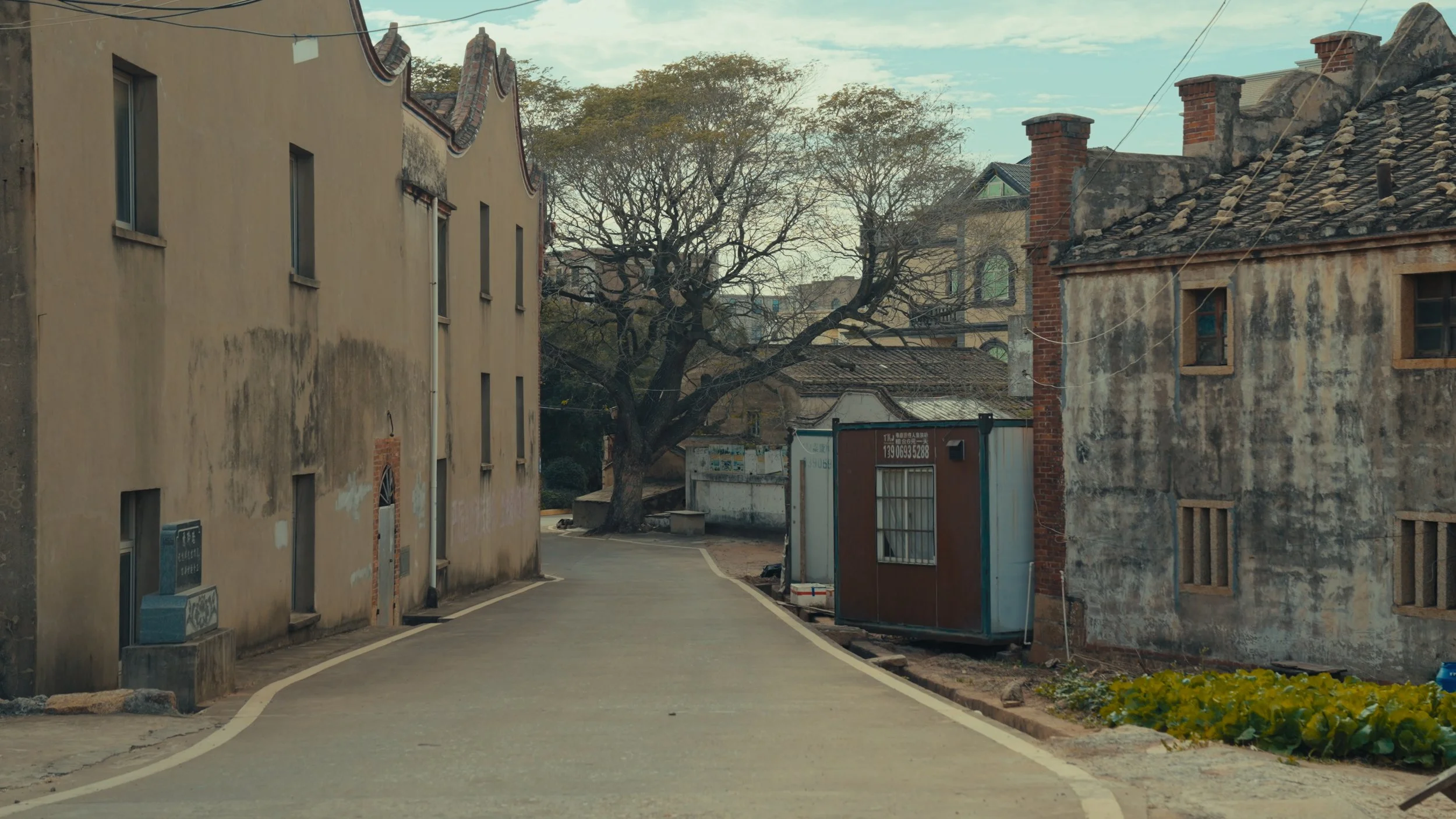
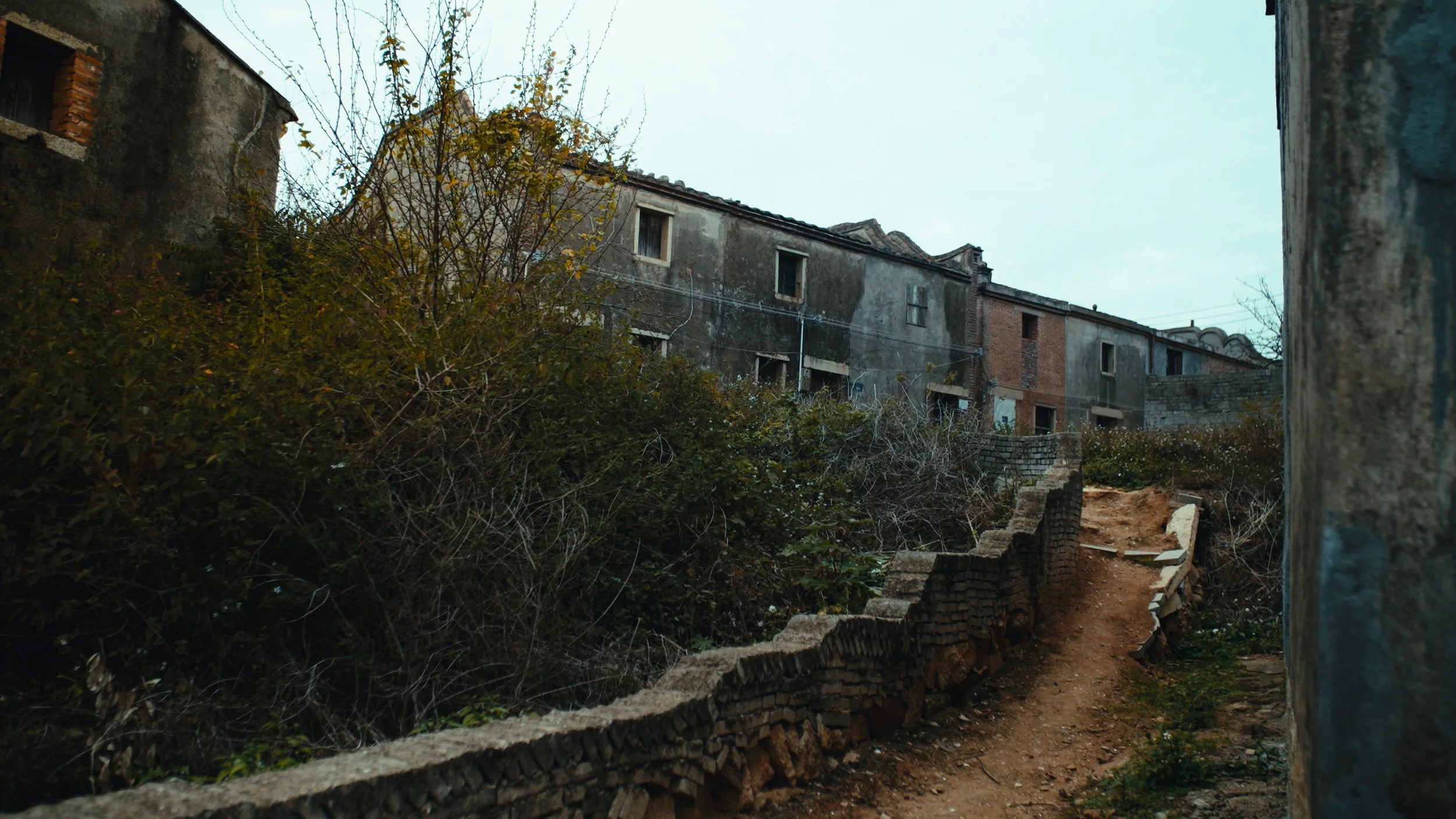
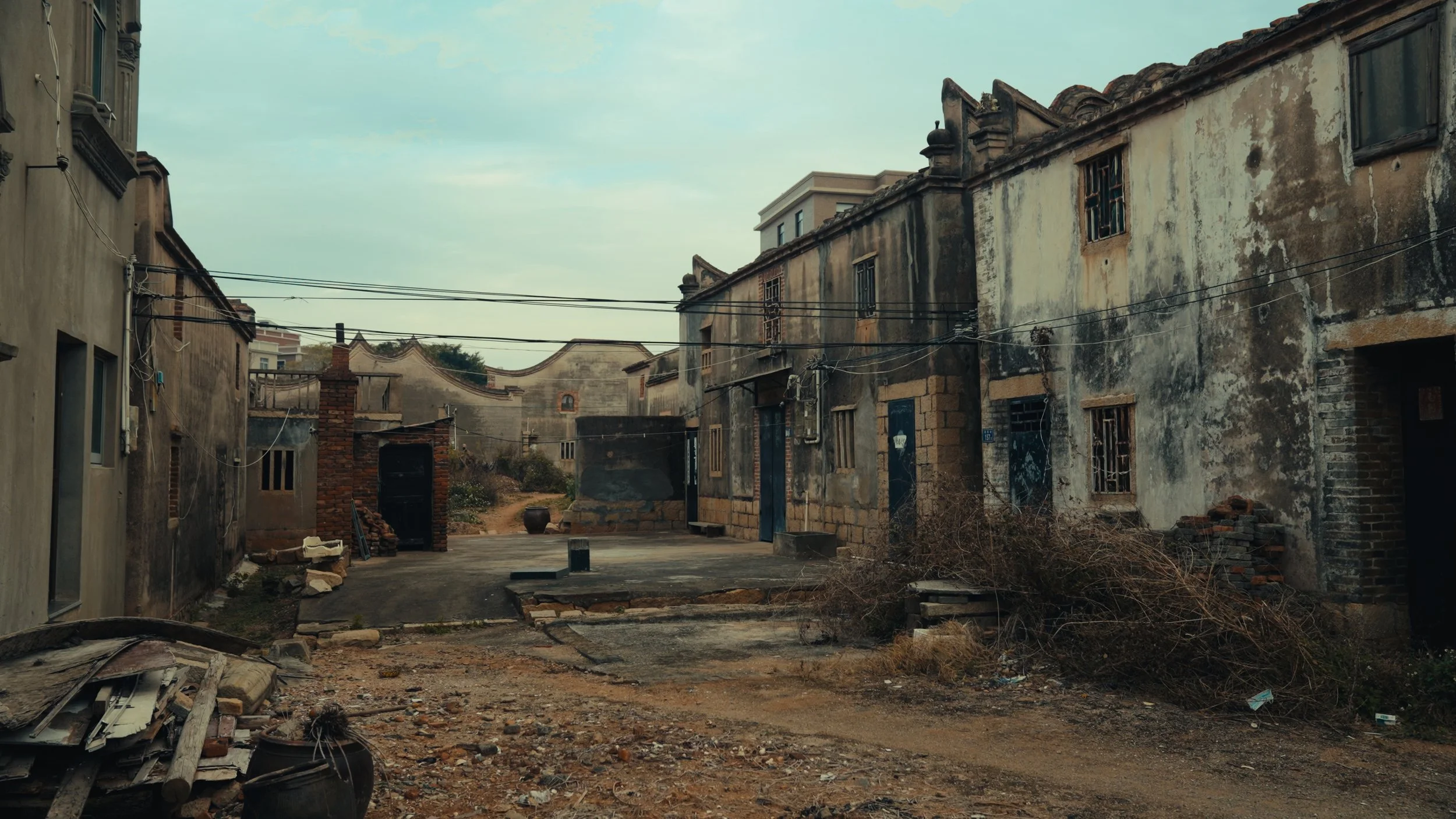
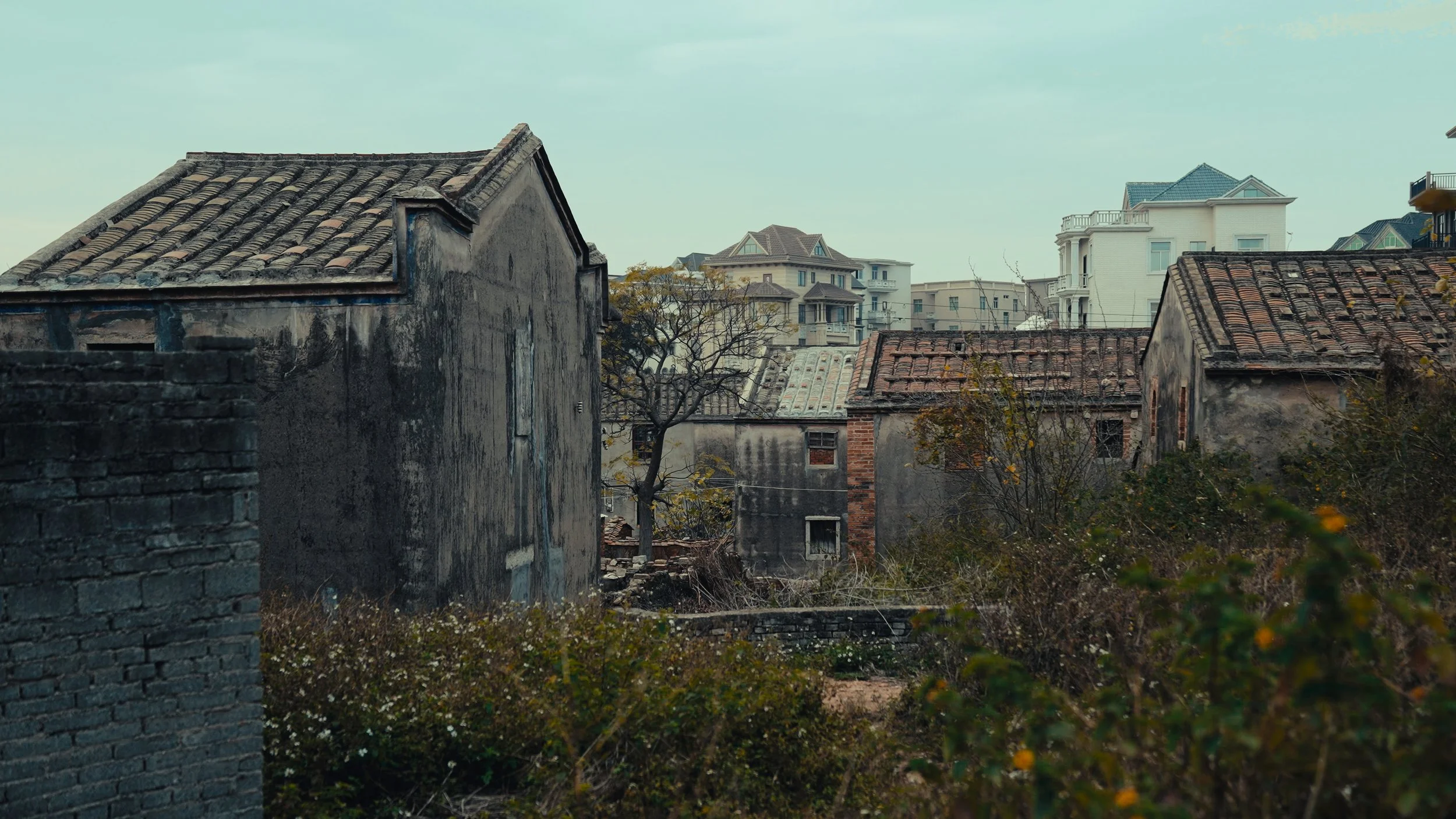
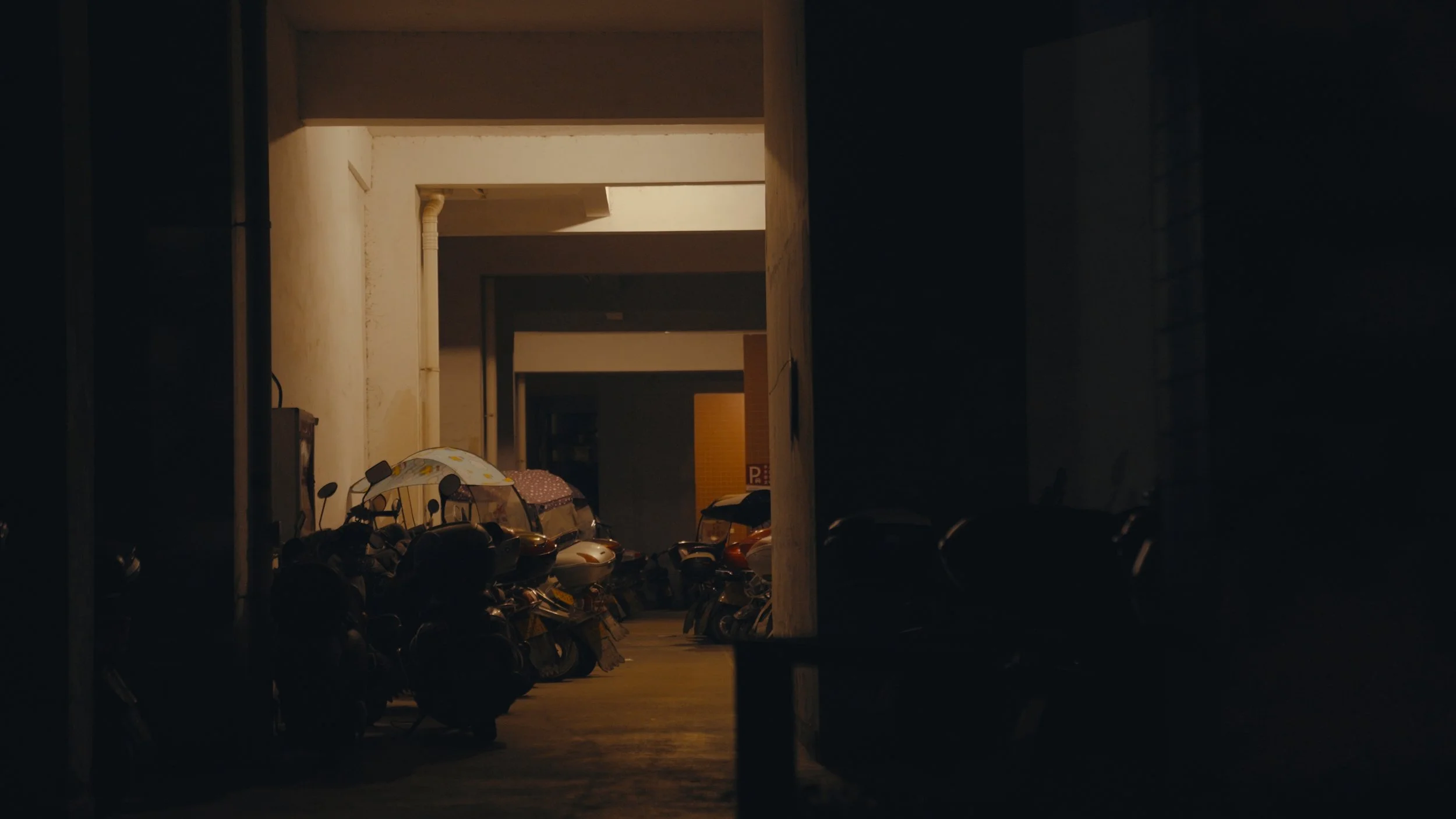
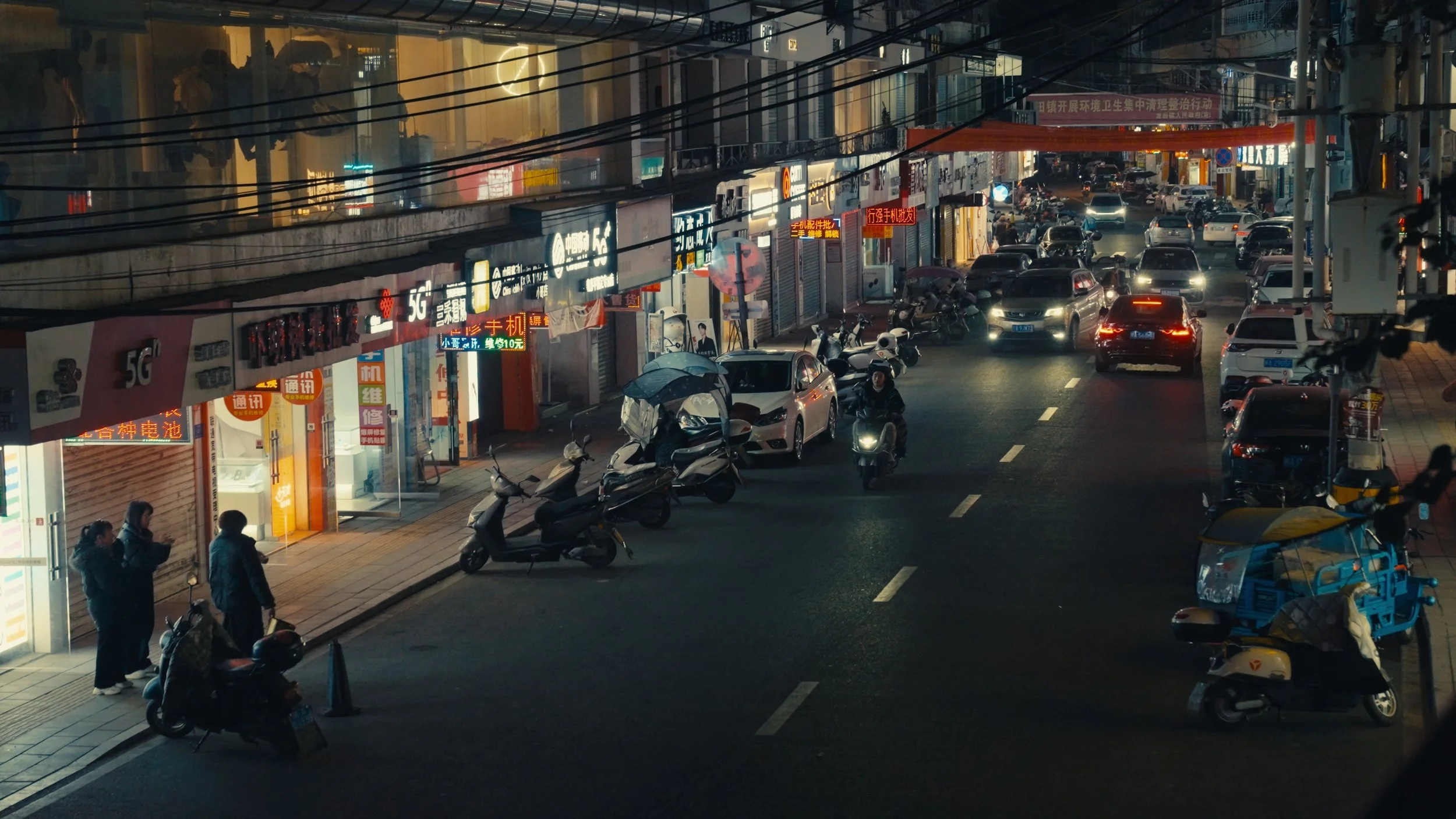
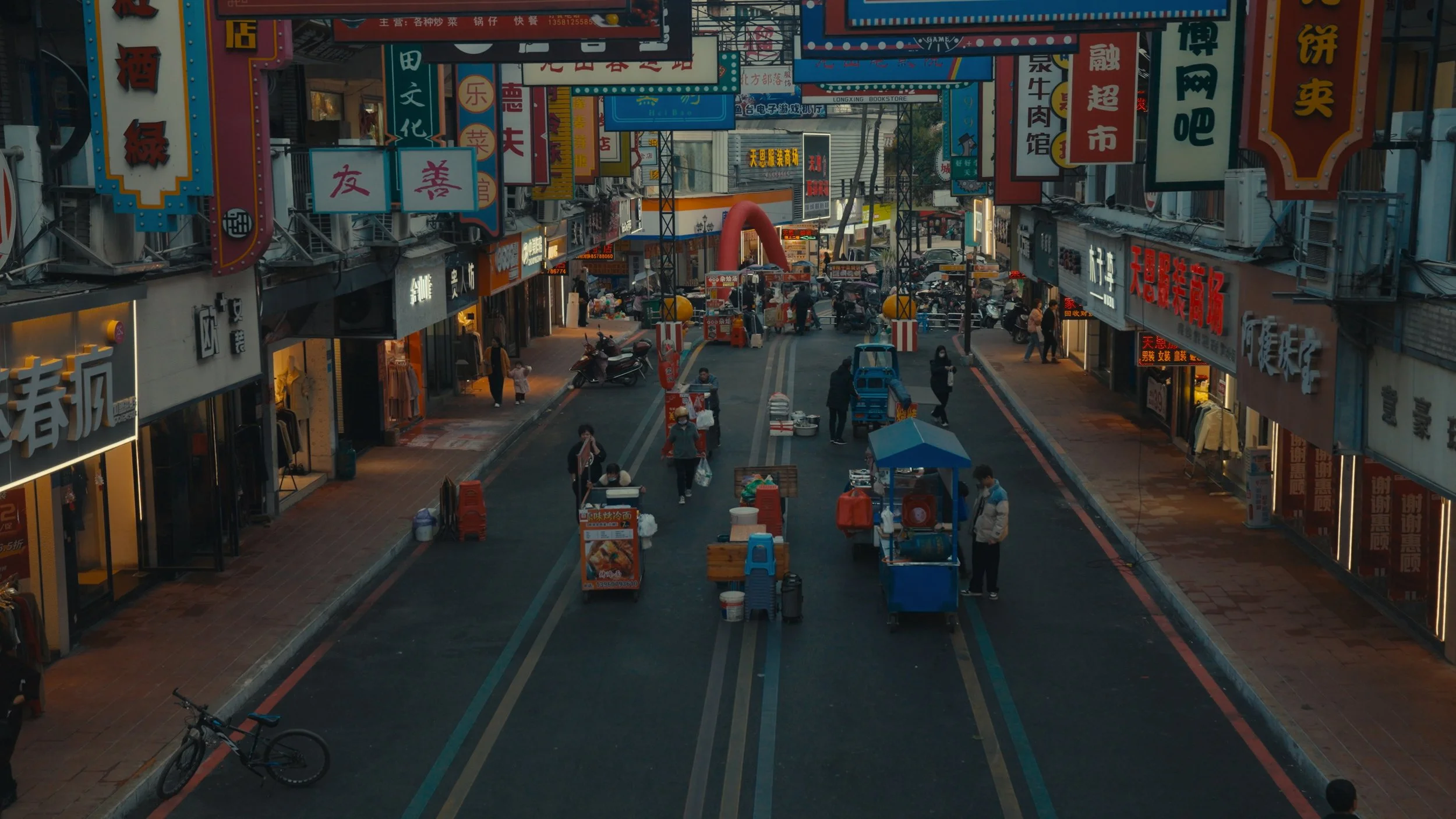
The locations we visited were mostly within a 10 minute drive from the house and were places that Vee grew up in. We are most likely the first people to film in these locations for a narrative project.
Long Tian 龙田
Dongbi Island 东壁岛
Wanda Plaza 万达广场
Dong Ying 东营
Xi Hua Village 西化村
Fu Lu Shan Park 福庐山公园
For the last block of the shoot we took a train down and spent a week in Guangzhou with Vee’s Sister to film her life while she’s away from her family.

Areas visited within Fuqing
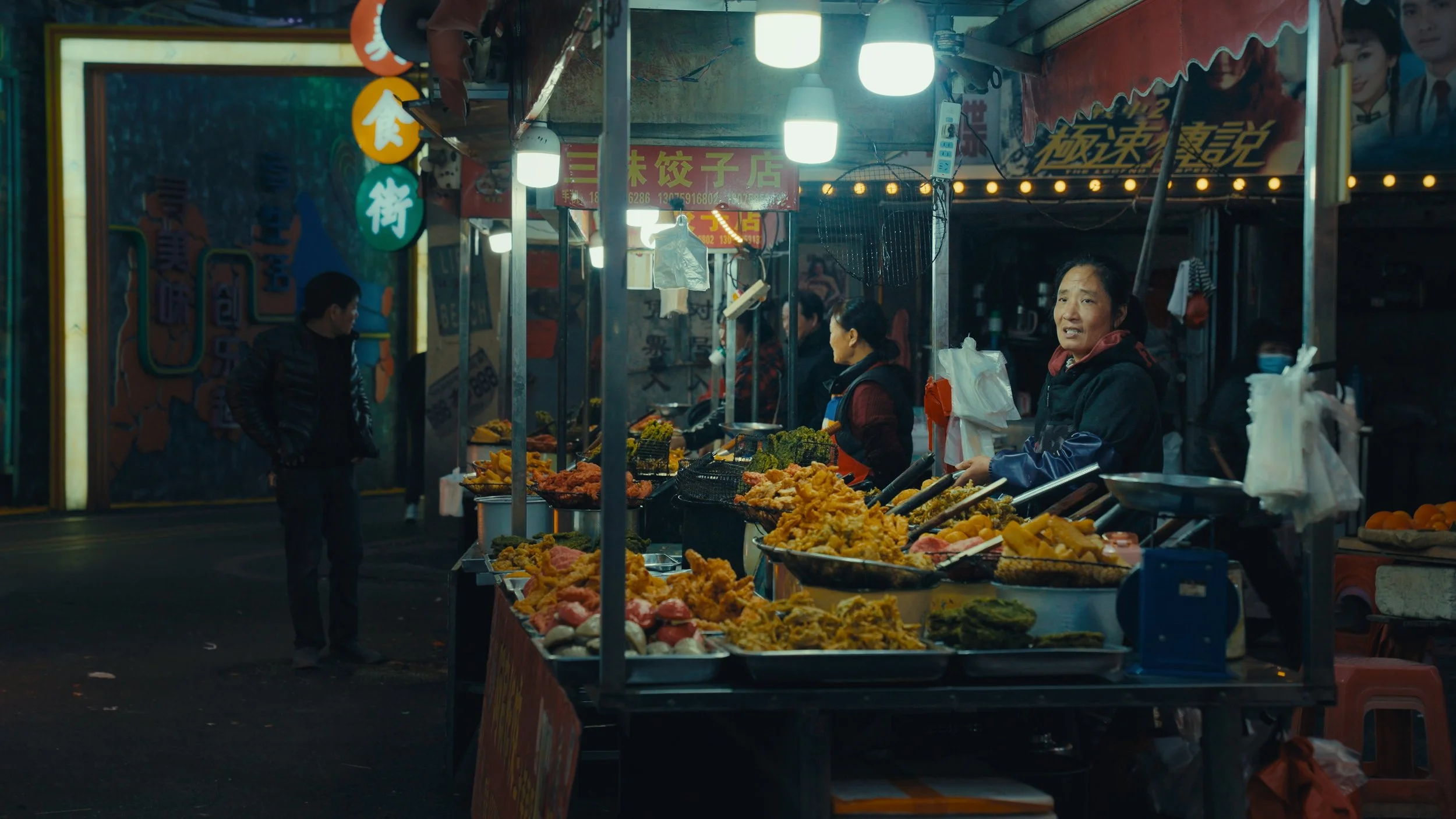
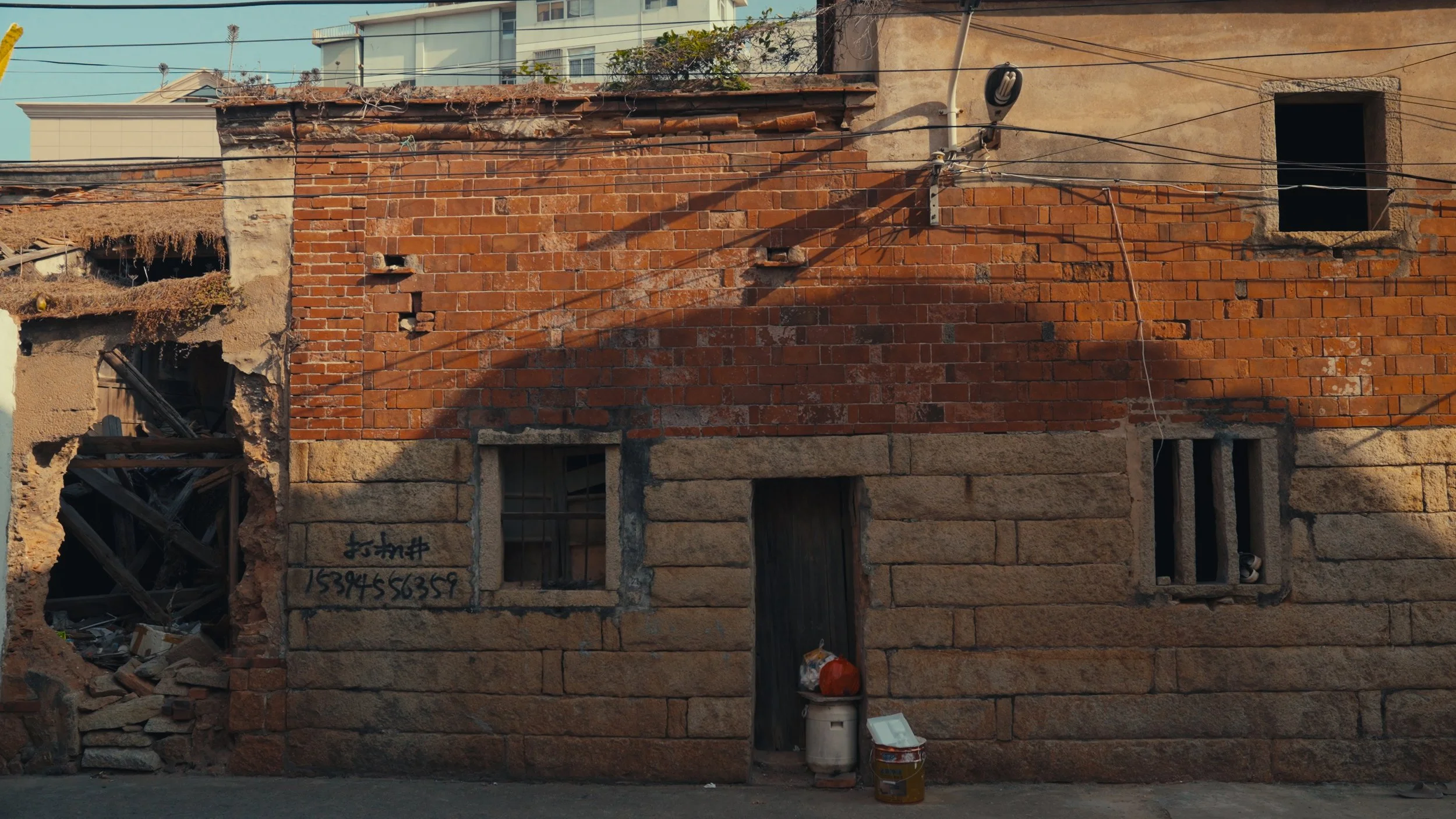
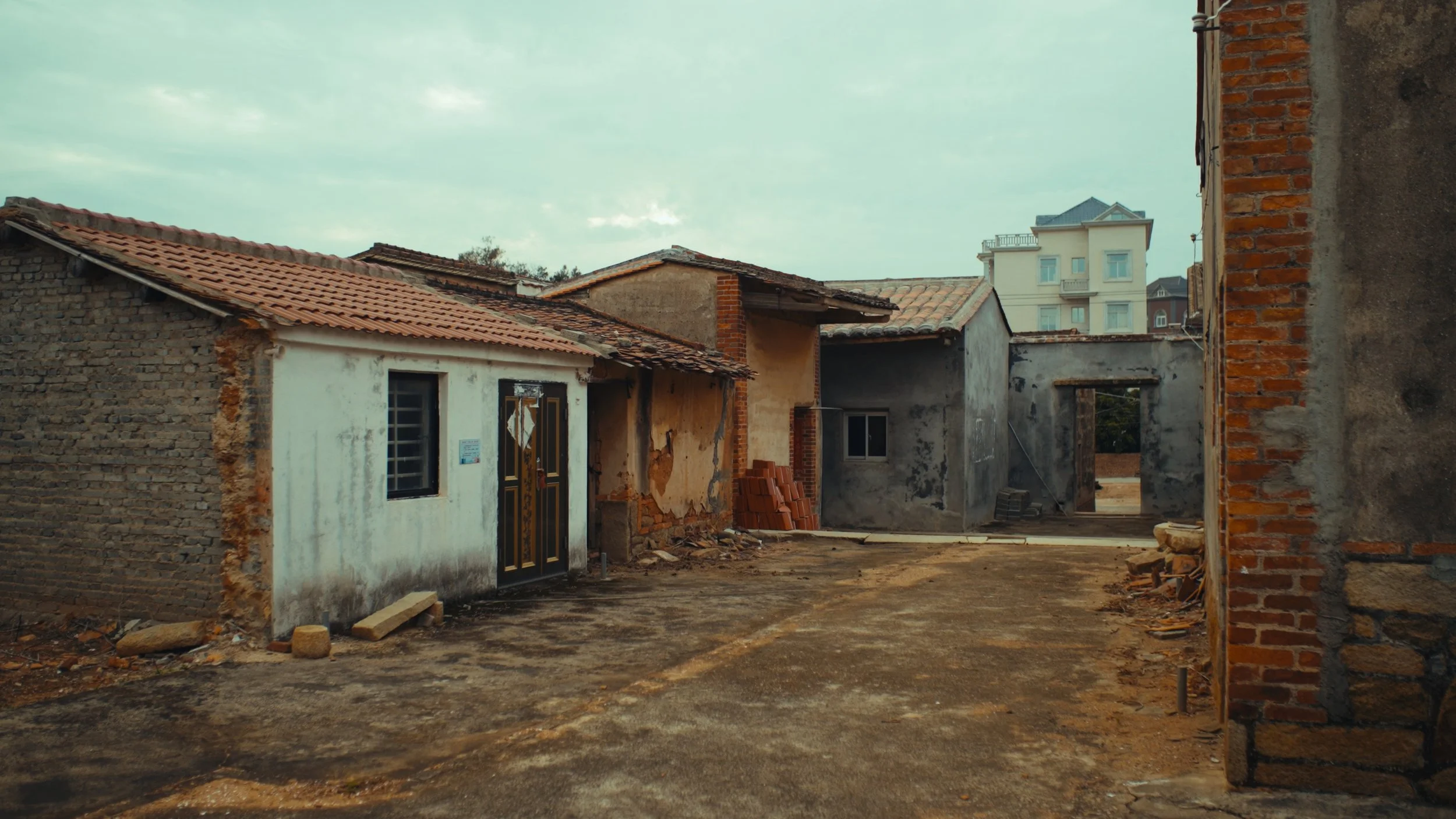
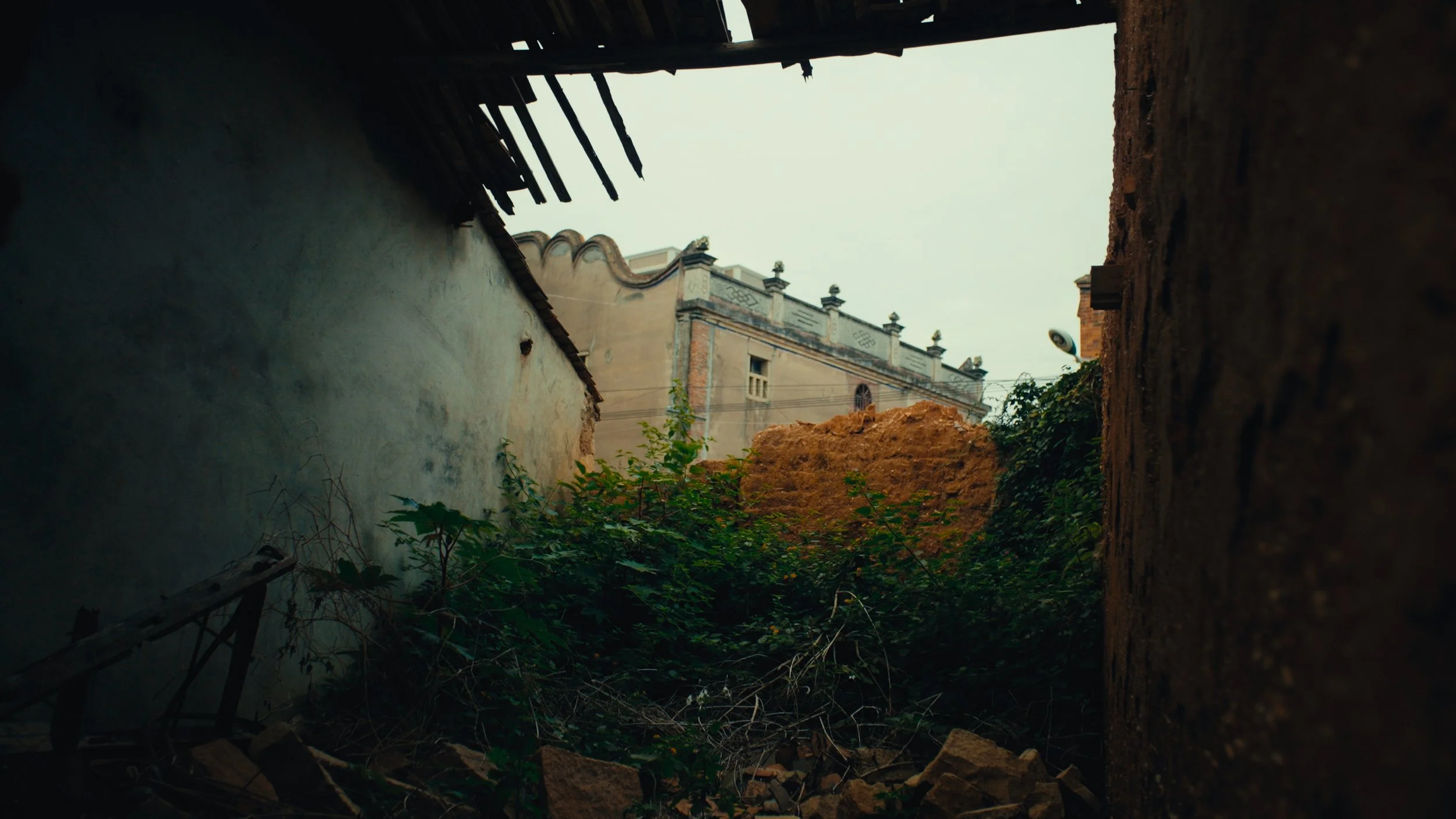
Filming Techniques
From very early on we knew we wanted to have a narrative aesthetic to the film but we also knew that there would be moments that we could not anticipate and we would have to adapt to that. I had to implement a mixture of Documentary and Narrative techniques to film this movie. For interior scenes that were not planned, we had to prepare to record without interruptions for up to a few hours. This meant not moving the camera for at least an hour to let the scene build gradually hoping that there would be something useable that we’d discover. There would be many takes where we’d run the camera for hours and not capture anything useful. But like shooting a documentary, we had to wait for opportunities to emerge and be on our toes for the right moment. At night I would review the footage to check if it was useable and in the mornings, Vee would listen through the footage for content and review if we needed pickups or if the story would change in any way because of what we recorded.
For all scenes that took place around meal-times or inside the kitchen, I would set up the camera where we could see everyone and let Vee’s family have their meals together. Lin and I would monitor the visual and audio outside in the lounge where we wouldn’t be seen. We would repeat this technique throughout the days often leaving the camera looking unattended while observing remotely. A trick that I used was switching off the red tally light so that nobody would know when I was recording. I felt that this would help me capture the most authentic responses without drawing attention to the moment. I would continue this discreet filming style in public.
During some scenes I had to make choices when to move the camera. As some scenes could not be repeated and we needed to capture multiple angles, I had to use my judgement on when I thought I could move the camera or change focal lengths. I didn’t want to interfere or influence the scene so I had to quietly react accordingly. Most of the time, Vee would be participating in the scene and we would not be able to communicate on how to capture an evolving scene so it would be up to me to use my judgement. To top it off, in these moments I could not understand the language so I relied on reading the emotion and action. For safety, I decided to only move the camera once the action has settled. Noise and action happening offscreen would add to the cinematic quality of the frame. We didn’t need to see everything as long as we could hear them.
Similar to how we approached our last film, we only used available lighting on location. There was no supplementary lighting units brought along - everything was filmed based on what the potential action was and where the practical and natural light sources are. As we decided on a documentary approach we didn’t want to be setting up lights and worrying about batteries or fixtures turning off during takes nor did we have any stands to do this anyways. As much as we could, we wanted to give all subjects the most natural stage possible. To further this approach, Lin and I would be monitoring the audio and frame in another room after setting it up and letting it roll. This would be the most common setup for scenes in the kitchen and around the house.

Setting up the frame and capture to a scene around a dining table. This set up was one of the more frequent styles we did as there were multiple discussions happening around all meal times.

We would attach a lapel mic to everyone in the scene and hide a shotgun mic off to the side. Lin and I would have our meal together in another room while monitoring audio and visuals remotely. These would frequently last an hour or more or until I had to change the card in the camera.

Monitoring the camera settings/ battery life and recording time on the FX3 was done remotely through the Monitor & Control App.
Post Production - 2023 - 2026
Post production was a very long process.

In July 2025 we engaged Music and Effects to finish the sound design and mix for the film
Timeline
Overseas Sound Mix
Test screening: 35 audience members. The questions and feedback/ review analysis
Antenna Documentary Film Festival Rough Cut Lab - 25th Sep 2024. Chris Boeckmann, Simon Price, Penny, Lane.
World Premiere - Vision Du Reel